
Амброзія, хоч і має назву, що асоціюється з чимось приємним і солодким, насправді є одним з найбільших ворогів для людей, які страждають від алергії. Ця рослина, відома своєю агресивною здатністю до розмноження та поширення, стала серйозною проблемою в Україні та багатьох інших країнах.
У час масового цвітіння амброзії зростає не лише частота алергій, а й кількість публікацій про неї. Але часто хибна інформація про амброзію з’являється ще на рівні визначення.
Пошук зображення за запитом “амброзія” серед перших 20 світлин видав мені 7 хибних фото, на яких амброзією і не пахло.
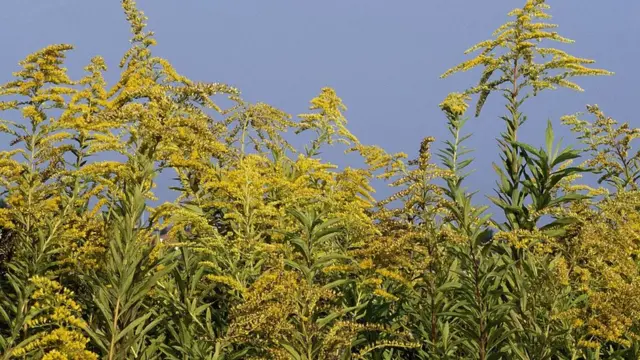
Найчастіше її плутають з золотушником канадським.
Автор фото,DEA / C.DANI / I.JESKE
Цей вид має помітні жовті суцвіття та цілісні листки, які легко відрізняють його від амброзії. Його часто теж підозрюють у симптомах алергії, однак найчастіше даремно – важкий пилок цієї рослини погано переноситься вітром, а тому у нього вкрай мало шансів потрапити на слизові оболонки людей.
Звідки взялася амброзія?
Амброзія полинолиста (Ambrosia artemisiifolia) потрапила до нас з Північної Америки, яка і є її батьківщиною. Проте нині вона поширилася і на решту материка, а також Центральну та Південну Америки. Її вторгнення охопило і Європу, і Азію, і навіть Австралію.
Вважається, що до Європи амброзія потрапила у 1873 році. Скоріше за все вона подорожувала “зайцем” у вантажах насіння червоної конюшини та інших сільськогосподарських культур. Це дало початок тріумфальної ходи переселенки новими просторами.
Її здичавілі популяції почали фіксувати у Німеччині, а згодом і у Франції, Великій Британії, Нідерландах та Бельгії. Згодом амброзія відкрила й східний фронт, поступово проникаючи у флори Сербії, Хорватії, Угорщини і не зупиняючись.
На теренах України ця чужинка прописалася ще з початку минулого століття. Сюди вона могла потрапити не лише випадково – її тут навіть спеціально вирощували.
У 1914-1918 рр. у межах нинішньої Дніпропетровщини був осередок культивування амброзії. Німецький фармацевт Криккер намагався використовувати рослину як лікарський засіб – замінник хініну і як протигельмінтний засіб.
Довгий час поширення виду в Україні обмежувалось невеликою площею. Все змінила Друга світова війна, яка викликала вибухоподібне поширення багатьох чужинних видів. Це сталося через масовий рух людей, вантажів та пошкодження рослинного покриву.
Стратегія успіху
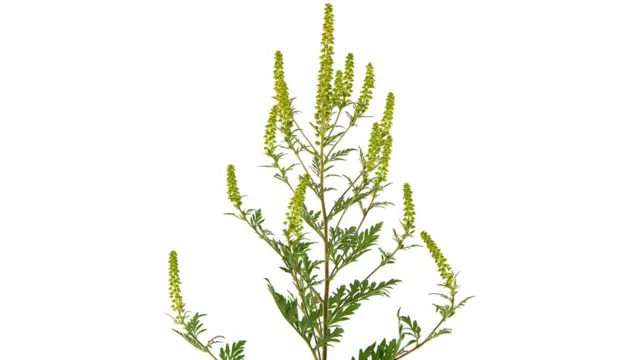
Амброзія має всі передумови для освоєння територій зі знищеним рослинним покривом. Середня рослина продукує 30-40 тисяч насінин, а деякі екземпляри можуть і 100 тисяч.
Автор фото,Getty Images
Не всі з них проростають на наступний сезон – деякі відкладаються про запас, формуючи насіннєвий банк. Ці “вкладення” надійно зберігаються у ґрунті до 10 років, але відомі експериментальні підтвердження проростання насіння після 40 років у стані спокою.
Наслідки вторгнення
Масовий розвиток амброзії змінює структуру рослинності. Мало того, що рослина швидко розмножується, так і ресурси довкілля амброзія використовує значно ефективніше, ніж інші рослини. Це має вкрай сумні наслідки, як для аборигенних видів, так і для ґрунту, бо він пересихає та бідніє.
Окрім того, амброзія ефективно затіняє рослини, які ростуть поруч, ускладнюючи їхнє життя. У результаті змінюється звична нам рослинність, зростає температура ґрунту та приземного шару повітря, відбувається ерозія.
Амброзія створює небезпеку не лише для мікроклімату та естетики міст і сіл, а й для збереження рідкісних оселищ та рослин. Ця рослина, якщо неправильно обробити посіви, може поширитися на них так, що у кілька разів знизить врожай.
Але є ще серйозніший вплив на людину. З середини липня аж до перших заморозків амброзія масово цвіте і викликає сильну алергію.
Від амброзії не сховатися
Одна рослина може утворити від 4 мільйонів до 10 мільярдів зерен пилку. Вони легко поширюються повітрям на десятки кілометрів. Пилок фіксували на висоті 5000 м над рівнем моря і на відстані до 160 км від найближчого місця зростання амброзії.
Тобто іноді можна відчути алергічні прояви від цієї рослини, навіть якщо вона не росте у вашому місті чи селі. Ось хто добре працює навіть на дистанційці!
Автор фото,Getty Images
Алергічні реакції в нашому організмі викликають білки, які містяться в пилку амброзії. Відомо 11 з них, але головними є Amb a 1 (алерген Е) і Amb a 2 (алерген К).
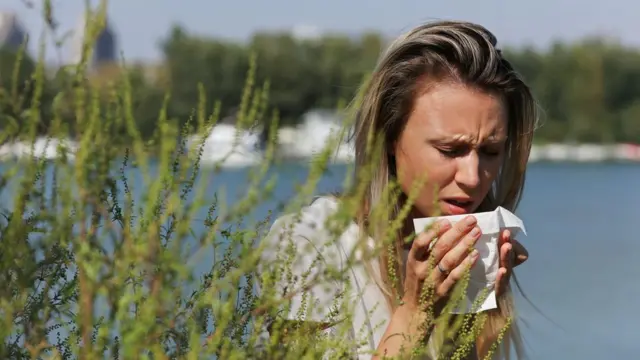
Коли пилок амброзії потрапляє на слизову носа та бронхів, ці сполуки провокують імунну реакцію, яка й призводить до сльозотечі, підвищення температури тіла, різкого запалення слизових оболонок верхніх дихальних шляхів, що може викликати напади бронхіальної астми.
Хворобливий стан, який викликає амброзія, часто супроводжується стомлюваністю, підвищеною дратівливістю, зниженням апетиту, депресією та нападами головного болю.
Є дослідження, які свідчать, що підвищення рівня вуглекислого газу та азотних сполук, а також потепління ще більше посилюють алергенність пилку.
Щоби вберегтися, вразливим людям слід обмежити контакт з пилком у час масового цвітіння. У цьому допоможуть респіратори та медичні маски, уникання місць зі значними заростями амброзії (пустирі, будівельні майданчики, узбіччя доріг та залізниць), зачинені вікна автомобіля під час подорожей ландшафтами з можливим зростанням рослини.
А у періоди, коли концентрація пилку найвища, варто навіть зачинити вікна помешкання.
Автор фото,Getty Images
Про те, як лікувати алергічний синдром, найкраще проконсультуватися з сімейним лікарем.
Чи можна боротися з амброзією?
Боротися з амброзією надзвичайно складно, адже від самого початку пропустили її масове поширення.
Один з варіантів – на короткий час засадити уражені землі озимими зерновими, адже в посівах ярових зернових північноамериканська гостя значно активніша.
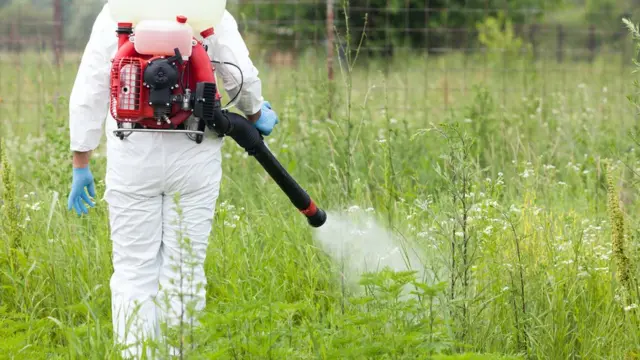
Можна боротися з амброзією хімічними методами, але тільки на обмежених площах.
З чого почати боротьбу з амброзією? Варто заохочувати людей знаходити і повідомляти про її осередки в містах та селах.
Варто двічі за сезон скошувати зарості амброзії: у період до цвітіння та за місяць після цього. Не можна косити її у травні-червні та у посушливий період без поливу.
Амброзію можна знищити механічно – просто вирвавши з коренем. Це особливо ефективно, якщо рослина росте довкола адміністративних будівель, дитсадків, шкіл та на території рекреаційних зон.
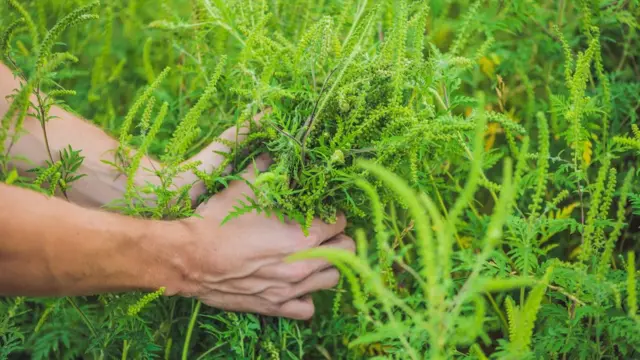
Автор фото,Getty Images
А для того, щоб амброзія не захоплювала Україну, варто відновити рослинний покрив там, де він знищений чи пошкоджений. Йдеться про ділянки вздовж будівництва нових автодоріг, про пустирі, зони з переміщеними ґрунтами тощо.
