Україна, без сумніву, стоїть перед складними викликами у контексті свого конфлікту з Росією. Однією з можливих стратегій для посилення власної оборони, про яку активно обговорюється, є можливість створення власної ядерної зброї. Це питання викликає безліч запитань — як технічних, так і реальних. Яка ймовірність того, що Україна зможе розробити ядерну бомбу? І чи справді це може вплинути на ситуацію у війні з Росією?
Багато іноземних політиків стали забувати про загрозу, яку несе ядерна зброя, сказав цими вихідними депутат Держдуми від владної партії «Єдина Росія» Андрій Колесник і запропонував нагадати світові про цю небезпеку, підірвавши ядерну бомбу десь на території РФ.
Торік ідею підірвати ядерну бомбу «десь над Сибіром» висловлювала і очільниця RT Маргарита Симоньян. А в середині серпня пропагандистське агентство «РИА Новости», посилаючись на анонімне джерело, поширило інформацію про нібито підготовку атаки України на атомні електростанції в Курській області РФ ( місто Курчатов) та окупованій Запорізькій області (в Енергодарі). Чи Захід досі боїться «російської жахалки» і що на це Україна, поцікавився в експерта з питань безпеки телеканал «Настоящее время», створений Радіо Свобода з участю Голосу Америки.
Україна може почати виробляти власну ядерну зброю, якщо не отримає гарантії членства в НАТО. Про це заявив колишній віце-прем’єр із питань європейської інтеграції України Олег Рибачук.
«Я, зокрема, звернув увагу на одну статтю відомого західного експерта, який говорить, що якщо Україна не отримає гарантію членства в НАТО, то єдиною альтернативою для неї буде виробництво ядерної зброї. В цій статті він говорить про те, що Україна в порівнянні з будь-якою іншою країною стоїть найближче до спроможності виробити власну ядерну зброю – це і наявність людського персоналу, це і технології, і запаси урану. І це вперше заявили серйозні міжнародні експерти, я думаю, що це один із тих факторів, які будуть, у тому числі, сприяти швидшому навіюванню будь-якої команди, будь-якого американського президента.
Тому, якщо нас залишать без виборів, ми в результаті російської агресії переконаємося в тому, що насправді Захід і НАТО неспроможні виконати свої зобов’язання перед Україною, ми будемо збільшувати випуск власної зброї. І скоріше за все ми можемо технічно і реально приступити до виробництва власної ядерної зброї, чимось нагадуючи Ізраїль, який сказав, що в Ізраїлю ядерної зброї немає, але якщо треба буде, то ми нанесемо відповідний ядерний удар по агресорах.», – сказав Рибачук.
Олексій Іжак, експерт із питань міжнародної безпеки, вважає, що розмови про створення Україною власної ядерної зброї «дуже теоретичні».
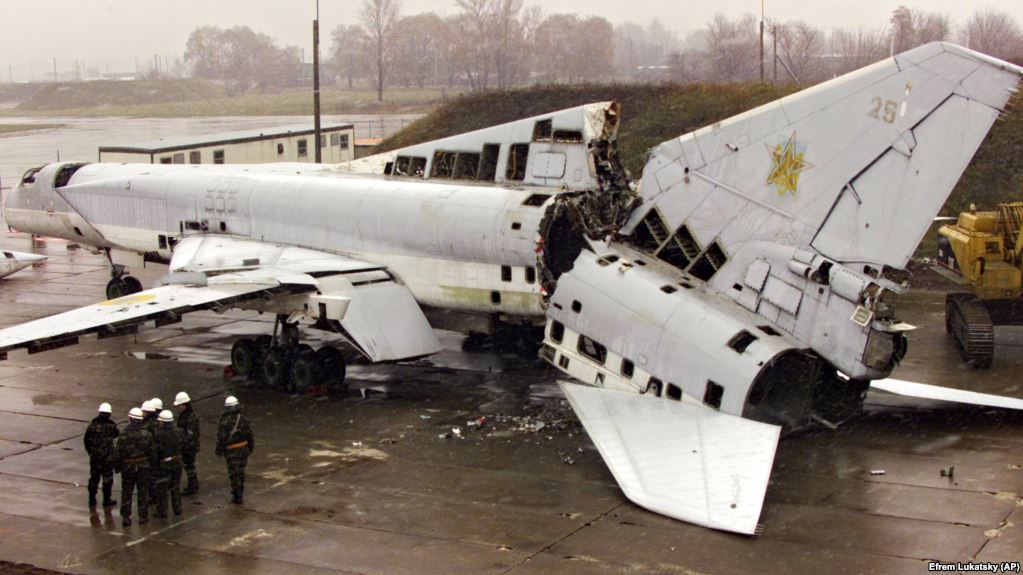
Утилізація стратегічного бомбардувальника Ту-22 на військовому аеродромі біля Полтави, листопад 2002 року. Літак знищено в рамках зобов’язань із відмови від ядерної зброї
«Ніхто в Україні не зважиться, якщо буде ухвалено таке рішення, робити це таємно, це потребує консультації», – наголосив Іжак в ефірі телеканалу «Настоящее время».
«Так, справді, зробити ядерну бомбу в сучасному світі багато розуму не треба. І те, що більшість країн цього не робить – це політичний вибір», – вважає він.
За словами експерта з питань міжнародної безпеки, володіння ядерною зброєю «не паралізує жертву». Іжак нагадує, що у Кремлі багато разів натякали на те, що якщо щось станеться не так, буде використано ядерну зброю. «Це позбавило Україну здатності чинити опір? Ні, – наголошує Іжак. – Я думаю, такі ж міркування можуть бути зроблені щодо Росії: що потрібно, щоб посадити Путіна за стіл переговорів? Мені здається, це навряд чи ядерна бомба.
«Усі ці розмови щодо того, що порушено Будапештський меморандум, важливі лише в тому аспекті, що ядерні країни дуже нервово на це реагують, – зазначає експерт. – Тому що дійсно порушено фундаментальну ідею кінця холодної війни, коли можна роззброюватися, це буде безпечно».
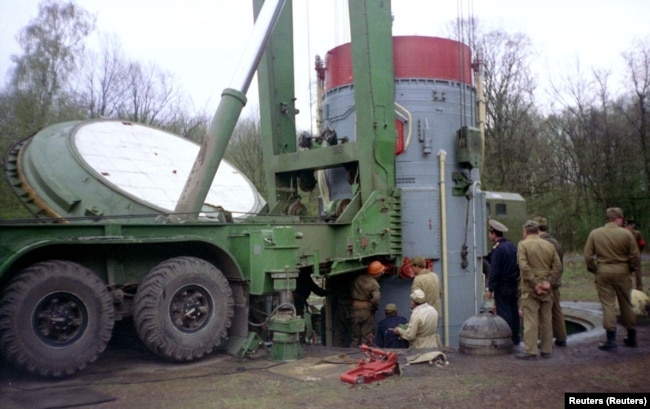
На військовій базі біля Хмельницького робітники виймають із шахти боєголовку ядерної ракети СС-19 радянської епохи, готуючи її до відправки в Росію, передавши тій останні 40 ядерних боєголовок. Квітень 1995 року
Україна підписала Будапештський меморандум у 1994 році, відмовившись від радянської ядерної зброї в обмін на гарантії безпеки від Росії, Великої Британії та США. Через 20 років – у 2014 році – Москва цей договір порушила, анексувавши Кримський півострів та спровокувавши бойові дії на Донбасі.

Демонтаж балістичної ракети СС-19 на базі у селищі Вакуленчук, Житомирщина, 24 грудня 1997 року. Фото AP
А за п’ять днів до повномасштабного вторгнення Росії в Україну – у лютому 2022 року – на Мюнхенській безпековій конференції президент України Володимир Зеленський нагадав, що за відмову від третього за розміром у світі ядерного потенціалу Київ отримав гарантії безпеки. Але вони не працюють.
«Цієї зброї у нас немає, безпеки у нас також немає. Немає і частини території нашої держави, – наголосив він.
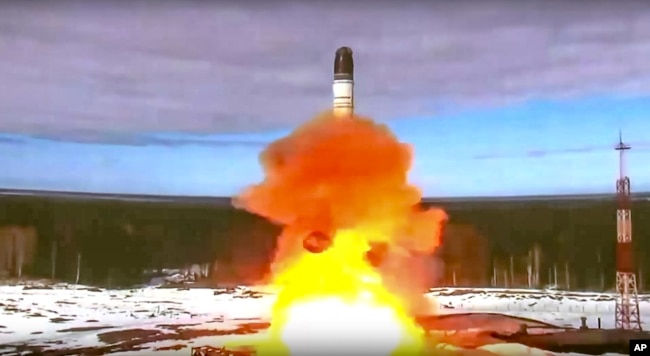
РФ запускає міжконтинентальну балістичну ракету «Сармат» з Плесецька на північному заході Росії. Очільник Росії Путін попередив, що без вагань використає ядерну зброю, щоб відбити спробу України повернути контроль над окупованими регіонами. Квітень 2022 року
У жовтні 2022 року на той момент міністр оборони Росії Сергій Шойгу провів переговори з колегами з Туреччини, Франції, Великої Британії та США. Як писала російська преса, він обдзвонював їх, щоб повідомити новину про те, що Україна готує провокацію на своїй території з використанням «брудної бомби». В Україні заяви Шойгу назвали брехнею. Експерт з питань міжнародної безпеки Олексій Іжак каже, що це була одна із «ядерних жахалок» Кремля.
«Це звичайна вибухівка, звичайна бомба, велика кількість тротилу та гексогену, куди домішано відпрацьоване ядерне паливо. І воно викликає не лише руйнування, а ще й зараження, подібне до чорнобильського, – пояснює експерт. – Загалом це важко зробити. Щоб розкрити ці каністри, по-перше, вони величезні – 200 тонн кожна каністра, їх важко пересувати. По-друге, той, хто розкриває їх – гине. Тому придумати таку конструкцію, яка дозволяє ефективно використати таку бомбу, – це такий самий теоретичний шантаж, як і всі інші ядерні жахалки».
Тим часом ще на початку цього літа в Росії пройшли навчання нестратегічних ядерних сил, у яких брали участь з’єднання Ленінградського та Південного військових округів, а також військові з Білорусі. За умовними цілями противника армії двох країн вчилися завдавати електронні ракетні пуски із землі, повітря та моря.
У Кремлі заявили, що ці навчання були спровоковані заявами лідерів країн НАТО щодо можливості відправки в Україну військовослужбовців країн Заходу. А Володимир Путін, виступаючи на Петербурзькому економічному форумі, говорив про можливу зміну ядерної доктрини Росії.
Ядерне стримування НАТО
Можливість застосування Росією тактичної ядерної зброї на війні в Україні обговорюють від початку російського вторгнення в лютому 2022 року. Росія дає для цього привід, переносячи ядерні боєприпаси до Білорусі та влаштовуючи навчання з виведенням ядерних сил на позиції, зазначає BBC.
Зі свого боку, НАТО хоч і більш помірковано, але відкрито нагадує про існування власної ядерної зброї в Європі і говорить про стримування Росії.
З часів холодної війни, коли йшлося про ядерне стримування, мали на увазі стратегічну зброю — міжконтинентальні ракети та боєголовки, здатні знищити іншу країну.
Але тепер у Європі говорять також про стримування меншого масштабу з використанням тактичної ядерної зброї (ТЯЗ) — зарядів меншої потужності, встановлених на носії з меншим радіусом дії.
Однак, попри такі обмеження, проблем з цим може бути більше. Щонайменше тому, що роль ТЯЗ у сучасній війні, кількість та призначення не дуже чітко прописані.
Про те, що в країнах НАТО стримування забезпечує не лише стратегічну зброю, а й ТЯЗ, розміщену в Європі, багато говорили й раніше. Але останніми роками про це згадують дедалі частіше, особливо після низки заяв російського керівництва, перевезення тактичної зброї до Білорусі та демонстративних навчань тактичних ядерних сил.
12 червня 2024 року генсек Альянсу Єнс Столтенберг, виступаючи на брифінгу перед початком зустрічі міністрів оборони НАТО, пов’язав ядерне стримування з російською активністю.
“Ядерне стримування НАТО — наша головна гарантія безпеки, наше головне стримування — це те, що протягом багатьох років розвивалося в угодах про Спільні ядерні місії, де Сполучені Штати мають ядерну зброю в Європі […] Те, що ми бачили в останні роки чи місяці — це небезпечна ядерна риторика з російського боку. Ми бачили, що Росія оголосила про розміщення ядерної зброї в Білорусі, і ми також бачили ще кілька навчань, ядерних навчань з російського боку”, – сказав він.
Оскільки тактична ядерна зброя призначена не для знищення держав супротивника, а для використання на полі бою, то її порівняно мала потужність – одна з важливих характеристик.
Однак, як зазначають військові експерти, порівняно мала потужність ТЯЗ небезпечна тим, що політики чи військові можуть ухвалити рішення про її застосування, оскільки думатимуть, що це не спровокує повномасштабну ядерну війну.
“Водночас низка тактичних боєприпасів мають заряди, які за потужністю дорівнюють, а іноді й переважають заряди стратегічних систем”, — пояснив ВВС інший російський експерт, який також побажав залишитися неназваним.
Це стосується зокрема російських тактичних ядерних боєприпасів, потужність деяких з них може бути досить високою. Втім в НАТО вважають, що насправді Росія не має наміру застосовувати ядерну зброю.
“Ми вважаємо малоймовірним, щоб Путін застосував ядерну зброю у цьому конфлікті. І ми не маємо інформації про те, що він вирішив застосовувати цю чи іншу зброю масового ураження, хімічну, біологічну чи радіоактивну. Але водночас російська риторика залишається досить небезпечною. Ми вважаємо безвідповідальним для керівника будь-якої ядерної держави [вимовляти такі слова] у цьому контексті”, – сказав ВВС представник НАТО.
У Києві тим часом вважають інакше. Секретар Ради національної безпеки та оборони України Олександр Литвиненко в інтерв’ю Times сказав, що не виключає, що Путін може застосувати тактичну ядерну зброю, якщо російська армія зазнає поразки в Україні.
Російський військовий експерт, який говорив з ВВС на умовах анонімності, сказав, що не варто недооцінювати рішучість Кремля.
“Я не дуже розумію, на чому ґрунтується така впевненість. Ми впевнені, що Путін не застосує ядерну зброю… Чому?” – сказав він.