
A new, unusual theory known as panpsychism is generating interest and debate among scientists and philosophers. According to this theory, all matter, including not only living organisms but also inorganic objects such as the Sun, has some kind of consciousness or intelligence.
The theory of panpsychism, which claims that everything in the universe has intelligence or intelligence-like qualities, is making a comeback despite its ancient roots. For some scientists, panpsychism is metaphysical nonsense. But proponents of the theory insist that everything around us, even the Sun, has consciousness, writes Futurism.
The theory of panpsychism suggests that all matter has some form of mind or consciousness. Even the sun has consciousness, according to one scientist. The concept of panpsychism has been around for a long time. The Italian philosopher Francesco Patrizi coined the term in the late 16th century. But in fact, the concept dates back to ancient Greece, when some philosophers believed that the entire world around us was a living being endowed with a soul and mind.
Panpsychism gained particular popularity in the 19th century, but was destroyed in the 1920s by a philosophical movement called logical positivism. This is the idea that scientific knowledge is the only kind of acceptable knowledge and that everything else is metaphysical nonsense.
But the inability of empirical sciences to solve the complex problem of consciousness, that is, why and how matter gives rise to the experience of consciousness, has recently revived interest in panpsychism.
For example, 20 years ago, Italian neuroscientist and psychiatrist Giulio Tononi proposed an integrated information theory of consciousness, which argues that consciousness is, in fact, present almost everywhere.
10 years ago, American neuroscientist Christoph Koch suggested that if chunks of matter could form into a human body and acquire consciousness, there was no reason why groups of elementary particles couldn't do the same.
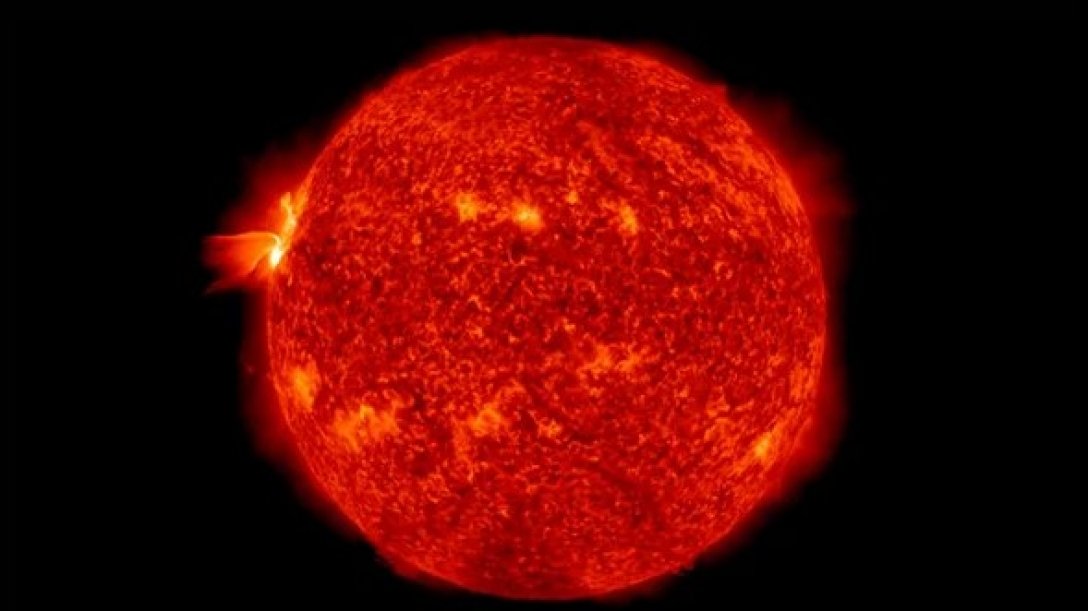
Recently, biologist Rupert Sheldrake published an article in which he suggested that not only humans have consciousness, but also our entire galaxy. Scientists also believe that the Sun has consciousness.
According to the scientist, consciousness does not necessarily have to be limited to the brain. The connection between the mind and physical systems is probably through rhythmic electromagnetic fields that are present in our brain. They are also present in and around the Sun, and they may be a connecting link between the solar mind and the body of the Sun, the biologist believes.
So if the Sun has consciousness, it is likely aware of the activities within the solar system, Sheldrake believes, particularly here on Earth, as well as its relationships with other stars within the galaxy and the galaxy in general.
But there is no evidence to support this theory. However, it is still interesting, although unusual. The Sun is a complex object that holds many secrets that have yet to be discovered by humans.
If everything the scientist says is true to some extent, then what could the Sun be thinking? According to Sheldrake, the Sun may be choosing which direction to send solar flares or coronal mass ejections, which can have a huge impact on life on Earth and to which our technology is very vulnerable.

