
Renaming toponyms in Ukraine is a topic that never loses its relevance and provokes deep public debate. Recent changes in the names of streets, cities and regions have caused a split in public opinion. Some consider this process a necessary step on the path to separation from the Soviet past and Russian influence, while others, like analyst Oleksiy Kopytko, warn of the danger of thoughtless renaming, which can lead to the loss of important historical symbols and the gift of part of the Ukrainian past to Russia.
The tape is filled with disputes over the “decolonization” of place names. Whether in Kharkiv, Dnipro, or Odessa.
Renaming will always provoke controversy, and I don't have the opportunity to participate in this substantively right now.
I will only note two points.
First
It is already obvious that the absolutely inept and destructive approach to “decolonization” consists in gradually giving Russia the entire theme of victory over Nazism. We will soon come to the point that in World War II, Ukrainians fought only in the ranks of the UPA. And the Nazis themselves left the captured cities. They simply changed their minds!
What will happen next is quite obvious. The first elections after the war will be a setback, a new round of scandals and discord. It looks very much like someone's political preparation, playing against the country.
Second
In addition to the above-mentioned stupidity, there is a clear course to “decolonize” the entire scientific and technological heritage created by Ukrainians during the Soviet period. Someone very clever has decided to give this layer to the Kremlin as a gift.
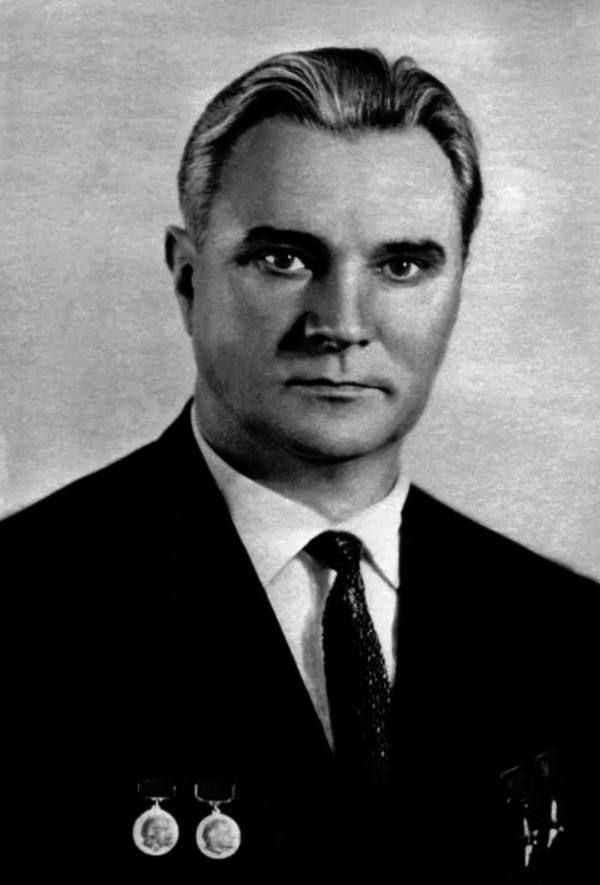
For example, renaming Academician Hlushko Avenue (a native and honorary citizen of the city) in Odessa to Yaroslav the Wise Avenue is something that requires a very serious explanation, in my opinion. And why?
Are we ashamed of one of the most famous rocket engine designers in the world? Are we ashamed that Ukrainians and people from Ukraine largely built the ENTIRE Soviet space program? Are we ashamed that the son of an academician who lives in Moscow signed up as a missionary and after 2014 was tempted to go to Donetsk? May he burn in hell!
This is what I wrote about during the discussion about the name of the metro station in Kharkiv, that is, the issue of scale and the level of the bar that we set for ourselves. You can name anything you want after Yaroslav the Wise. And it doesn't require any mental effort. It's a very worthy name, it's one of the greatest figures in our history. But when this name is used to wash away the fact that Ukrainians are strong in science and technology, where we have to fight to regain our positions, that's evil, isn't it? Are those achievements no longer valuable?

Someone is clearly infected with the idea of driving Ukraine into the narrow framework of an “agrarian superpower” without traditions and, accordingly, without a future.
It's time to realize: when a society/country does not rethink, but simply gives away something of its own, earned with sweat and blood, it gives away not a set of fables about the past, but people and territories.
First in the mental sense, and then in the physical sense.
We already have the tragic example of Crimea. Ukraine refused the Crimean War of 1853-1856, completely giving it to Russia. Although it was a war that the Ukrainian people carried on their shoulders - from Odessa and Shostka to Luhansk. And there is plenty of evidence for this. Since 1954, Moscow has been spreading the myth of Sevastopol as a “city of Russian sailors”. And in Kyiv, even after 2014, they were not against it.
The Russians have a monopoly. And this is the direct fault of the narrow-minded politicians and officials who were responsible for historical memory.
It's time to draw some conclusions.