
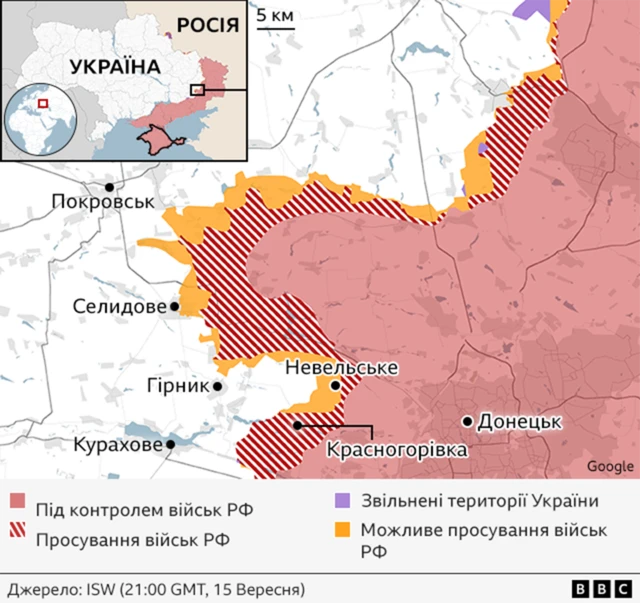
The Ukrainian group near the village of Nevelske, located near the outskirts of Donetsk, faces a serious risk of being surrounded. According to military experts, the Russian army is approximately 5 km from closing this potential “cauldron”, which could seriously complicate the situation for the Armed Forces of Ukraine.
The situation here began to deteriorate in late August, when Russian troops, having run into Ukrainian defenses near Pokrovsk and Selydove, suddenly turned their movement south.
Rapidly moving towards the town of Kurakhove, they began to cut off the Ukrainian garrison located further east – between Nevelske, Hirnyk, and Krasnohorivka.
In order to close this “cauldron”, the Russian army is simultaneously attacking from the north and southeast. As of September 16, the “neck” of this salient is about 5 km.
Russian military telegram channels have reported several times that Ukraine has withdrawn its garrison to avoid encirclement. But this apparently never happened.
The Ukrainian Air Force has asked the spokesmen of the operational groups of the “Tavria” and “Khortytsia” troops to comment on the situation near Nevelske.
How to avoid the environment
Ukrainian military analyst Kostyantyn Mashovets of the Information Resistance group calls the situation in this area “threatening” and could turn into “catastrophic.”.
According to his data, the Russian army from the southern face of this salient advanced in the direction from Krasnohorivka to the villages of Gostre and Oleksandropil.
On the northern front, the Russian Armed Forces have already occupied the village of Galitsynivka and are fighting for Zhelanne Pershe and Ukrainy.
The Russian Defense Ministry announced on September 14 that it had captured the village of Zhelanne Pershe. Ukrainian sources have not yet confirmed this.
The loss of this settlement would mean that almost all of the main supply routes for the Ukrainian group near Nevelske would be under enemy control. It would be possible to escape the encirclement only via field roads, crossing the Vovcha River.
“If the enemy continues to advance on this section, it could well become catastrophic for the entire flank of our group, which operates southeast of Pokrovska,” Mashovets emphasizes.
At the same time, he notes that this Russian plan “is not a secret for the Ukrainian command.” As long as the Armed Forces of Ukraine continue to hold the Hirnyk – Zhelanne Druge – Oleksandropil – Kurakhivka area, this ensures the stability of their defense along the Vovcha River in the area of the crossings, the expert emphasizes.
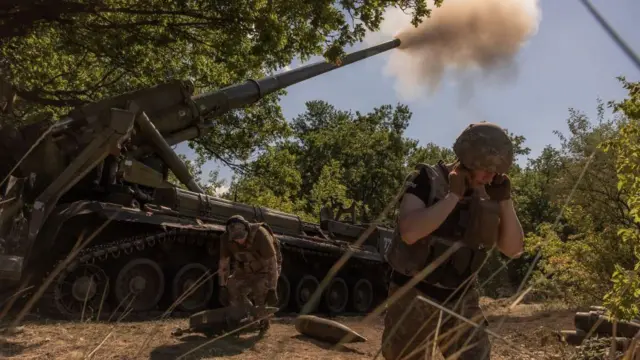
Photo credit: Getty Images
That is, this makes it possible not only to supply the group near Nevelske, but also to quickly withdraw it if necessary.
Moreover, Mashovets writes that the advanced units of the Armed Forces of Ukraine have already begun to withdraw from this bridgehead in an organized and gradual manner, waging rearguard battles with the enemy.
Previously, the analyst wrote about the huge disproportion of forces between the parties on this section of the front. According to him, the Nevelsky bridgehead on the Ukrainian side holds only a few “partial” battalions. They are opposed by the Russian army corps (which may number from 15 to 30 thousand fighters).
Accordingly, in such conditions, it is extremely difficult to hold positions. But it is also easier to withdraw a garrison that is small in number from the encirclement.
What is the Russian army's plan in Donbas?
The Ukrainian command says that the Russian Federation has not abandoned plans to attack Pokrovsk and is currently strengthening the flanks of its group.
“They are trying to strengthen the flanks to get closer to Pokrovsk, semi-encircle it, and then start razing the city to the ground,” Major Serhiy Tsekhotsky of the 59th Brigade tells BBC correspondent Abduzhalil Abdurasulov.
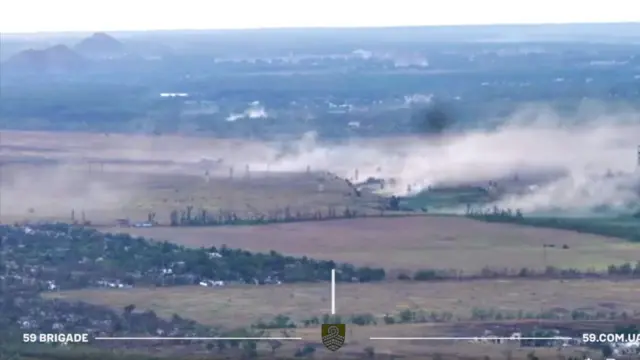
Photo by: 59th Yakov Handziuk Military District
Lieutenant Colonel Oleg Demyanenko, who commands the tank battalion of the 110th brigade, also says that Russian troops are now advancing from the flanks, instead of directly assaulting Pokrovsk.
However, he claims that now the Russians are mostly focused on the southern flank - this is the Kurakhiv direction.
Russian troops are attacking Ukrainian positions in small groups and often without armored vehicles, the military says.
“They send two or three people who try to get to a certain point on the field,” explains Ciehotsky. “Then others also try to get to that point. And when they have 10 or 15 people there, they try to attack us.”.
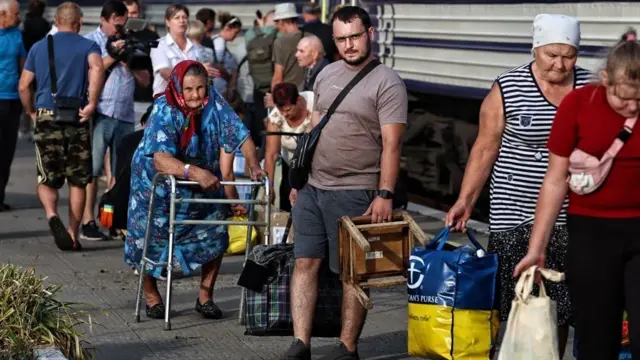
Photo credit: Getty Images
The Kurakhovo area is difficult for both defense and offense because it is flat, says Nazar Voytenkov from the 33rd Brigade.
"We are constantly shelling the fields. The Russians are losing transport and people here.".
According to him, his brigade is successfully holding its positions on the front line.
Kurakhove is connected to Pokrovskoye by roads, which are part of the infrastructure for moving troops and supplies to the front line.
If the Russians take this city, they could move north to attack Pokrovsk from a new direction, says DeepState analyst Roman Pogoriliy.
Another possibility is that they could attack Ukrainian forces from the rear in Vuhledar, he adds, a town on the southern front line in Donbas that the Russians have been trying to capture since the start of their full-scale invasion.
In early autumn, the Russian army intensified its pressure in the Vugledar direction, capturing settlements to the east and west of the city and close to limiting the supply routes of the Ukrainian garrison.

