
Authorities in Russia's Tatarstan region said that businesses in Yelabuga and Nizhny Kamsk were attacked by drones on Tuesday morning.
The explosions occurred in the Alabuga special economic zone, where enterprises are located more than 1,200 kilometers from the border with Ukraine.
A factory assembling Shahed drones was hit in Yelabuga. A drone attacked an oil refinery in Nizhny Kamsk
BBC sources in law enforcement agencies confirmed that the attacks on the Tatarstan oil refinery were a joint operation by the SBU and the State Security Service.
Since the beginning of the year, Ukrainian drones have repeatedly attacked oil refineries in Russia, which, according to media reports, led to a reduction in fuel production.
A video of one of the strikes has appeared on Russian Telegram channels, showing a drone crashing into a building in Yelabuga, causing an explosion.
As reported by the OEZ Telegram channel, at 5:45 a.m. local time, two drones allegedly hit the dormitory.
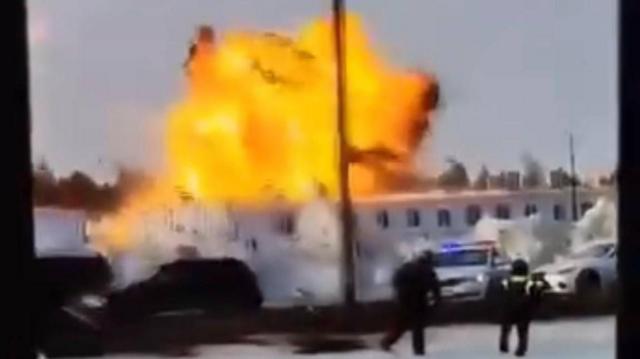
AUTHOR OF PHOTO, SCREEN/TELEGRAM Photo caption, Explosion in Yelabuga
Local authorities insist that there is no serious damage to the enterprises. “The technological process has not been disrupted,” the press release from the head of Tatarstan states.
According to the latest data, seven people were injured in the attack, three of whom were hospitalized.
However, “RBK-Ukraine”, citing a source, claims that as a result of the strike there is significant destruction of production facilities. A source of the Air Force of Ukraine in the law enforcement agencies also indicates significant destruction.
Last August, the Washington Post reported that Russia wanted to establish a large-scale production of Iranian-made drones at a factory in Yelabuga. They planned to produce 6,000 Shaheds by 2025.
An investigation by journalists from the publication "Protokol" and the YouTube channel "RZVRT" alleged that students from the "Alabuga Polytechnic" college were allegedly involved in assembling kamikaze drones at a factory in a special economic zone.
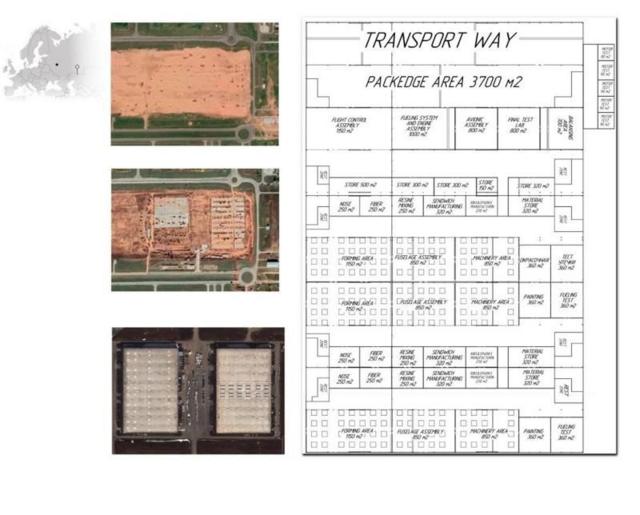
PHOTO AUTHOR, THE WASHINGTON POST Photo caption, This is what the Russian factory for the production of “Shaheeds” looks like, according to The Washington Post
Refinery in Nizhnekamsk
Russian media also report that a drone attacked an oil refinery in Nizhny Kamsk. It is part of the Tatarstan oil refining complex.
According to a TASS source, the attack caused a fire, which was extinguished in 20 minutes.
The Baza Telegram channel writes that three people were injured.
At the same time, the authorities of Nizhny Kamask claim that the electronic warfare system intercepted the drone that attacked the refinery, and there were no injuries or damage.
According to Reuters, the drone attacked the AVT-7 primary oil processing unit at the Taneco refinery, owned by Tatneft.
BBC Ukraine sources in law enforcement agencies confirmed that the attacks on the refinery in Tatarstan were a joint operation by the SBU and the State Security Service.
"A Ukrainian long-range drone hit a primary oil processing unit at the Nizhny Kamsk refinery, causing a fire there. The capacity of this unit was 8 million tons of oil, which is 2.6% of the total annual processing of the Russian Federation. In addition, this plant is one of the five largest refineries in Russia.".
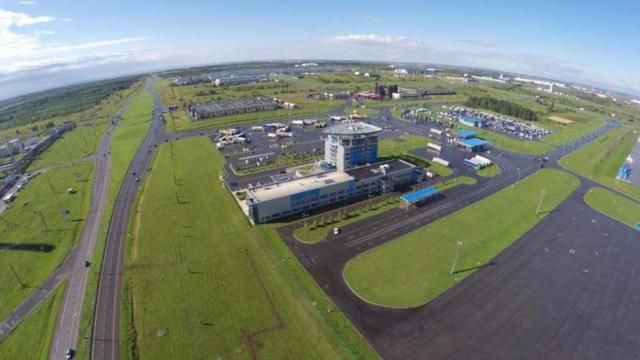
PHOTO AUTHOR, ALABUGA.RU Photo caption, The special economic zone in Yelabuga was opened in 2007
In March, drone attacks on Russian refineries, as well as other industrial facilities, increased.
However, this is the first time that Ukrainian drones have flown to Tatarstan - a distance of over 1,200 kilometers.
Ukrainian media regularly report that the GUR is behind drone attacks on Russian industrial facilities. Kyiv has not officially announced the strikes, but last week, President Volodymyr Zelenskyy spoke in an interview with the Washington Post about the negative reaction of the US authorities to such attacks.
“We used our drones. No one can tell us that we can’t,” Zelensky said, linking the shelling of Russian refineries to the fact that Ukraine lacks air defense capabilities to protect its energy infrastructure from Russian strikes.
The day before, Minister of Digital Transformation Mykhailo Fedorov told the German publication Welt that Ukraine is already producing unmanned aerial vehicles that can travel over a thousand kilometers.
He also noted that Ukraine has increased the production of long-range drones tenfold compared to last year.
“Most drones in use have a range of 700 to 1,000 kilometers. But now there are models that can fly over 1,000 kilometers,” explained Fedorov.
The video from Tatarstan shows large drones that have not been seen in previous strike footage.
Attacks on Russian refineries are affecting the Russian economy more than Western sanctions – CNN
As CNN writes, citing several interviewed experts, Ukrainian drones most often strike not fuel storage facilities, but distillation plants, where crude oil is processed and converted into fuel.
Experts believe that these attacks could affect the Russian economy more than the current sanctions, according to a CNN publication.
“If you think about the sanctions that were imposed, they largely bypassed energy,” explains Helima Croft of investment bank RBC Capital Markets. “In fact, it was the exports of energy, crude oil, natural gas and refined petroleum products that gave Russia the economic lifeline to continue this war.”.
Ukrainian attacks on Russian refineries have already led to a rise in global oil prices: this year the price of Brent oil has increased by almost 13%.
American officials are concerned about the consequences for the global economy of these strikes, but “the impasse in Washington over funding for Ukraine and the possibility of changes in the White House next year may give Kyiv some leeway,” the publication says.
