It's been 10 years since the annexation of Crimea began. Analyst Oleksiy Kopytko looks back at these events to discuss what strategy is needed for the peninsula and why true peace is impossible without its return to Ukraine.
10 years of war (formally)
Together with Dima Tymchuk, we have been studying the role of the Russian Black Sea Fleet in the system of Russian influence in Crimea since 2008. Therefore, we have observations over a period of 15+ years. And deeply subjective, tendentious conclusions that will certainly offend the feelings of believers.
1. It seems to me that at the beginning of the war, the Kremlin did not have a clear plan to “seize and annex Crimea.” This outcome was not predetermined, it developed as events unfolded.
They certainly had some experience (theoretically they had it in our General Staff regarding defense). There was a certain force component and networks on the ground in readiness. There was knowledge that almost all of Ukraine's force leadership (in the National Security and Defense Council, the Minister of Defense, the Head of the Security Service of Ukraine, the Head of the Ministry of Internal Affairs, etc.) were citizens and/or agents of Russia. And a tactic had been honed over decades (which is still being used today): to press until it is squeezed. Against this background, a political decision was made to “press.”
If Yanukovych had somehow remained at the head of the state, I think that at that moment they would not have rushed to formalize the illegal annexation, they would have fought for more. They would have used the weakening regime for hybrid force penetration and expansion of all forms of presence, at least in the south and east. Which would soon lead to a military clash, probably even more tragic for Ukraine .
2. When the command to “press” began to be implemented, it was quite expected that the Ukrainian security verticals were paralyzed . The military and special services did not receive adequate commands, and many officials took advantage of the loophole to evade making decisions in conditions of uncertainty, so as not to be held accountable for anything later.
I remember that time very well. The feeling of complete hopelessness. When there was information, but there was simply no one to pass it on for action.
3. The backlash could come 1) as a reaction from the West and 2) as a reaction from citizens.
The West behaved in the most shameful manner, limiting itself to a decorative decree by Obama to impose sanctions two weeks after the occupation began. A vivid illustration of the principle of “too little, too late.”.
The resistance of the population was delayed. For obvious reasons.
On the one hand, people were confused and scared. It was hard to believe what was happening. It was difficult for many to form their own opinions. Especially given Russia's dominance in the information space.
On the other hand, in the heat of the first days, there were mistakes. I am convinced that the repeal of the Kivalova-Kolesnichenko language law was a tragic mistake. This was a very untimely decision that seriously facilitated the enemy's task.
I think that if Moscow had faced opposition at the international level, then in that situation in Sevastopol it would have retained control, but it would have been possible to fight for Crimea.
(I deliberately do not write anything about the resistance directly in Crimea itself in late February - spring 2014. The participants in the events will write about this in due time. Because the current picture is distorted).
As a result, Putin was able to bring the game to a difficult-to-reverse result: he formally incorporated the occupied Crimea and Sevastopol into the Russian Federation.
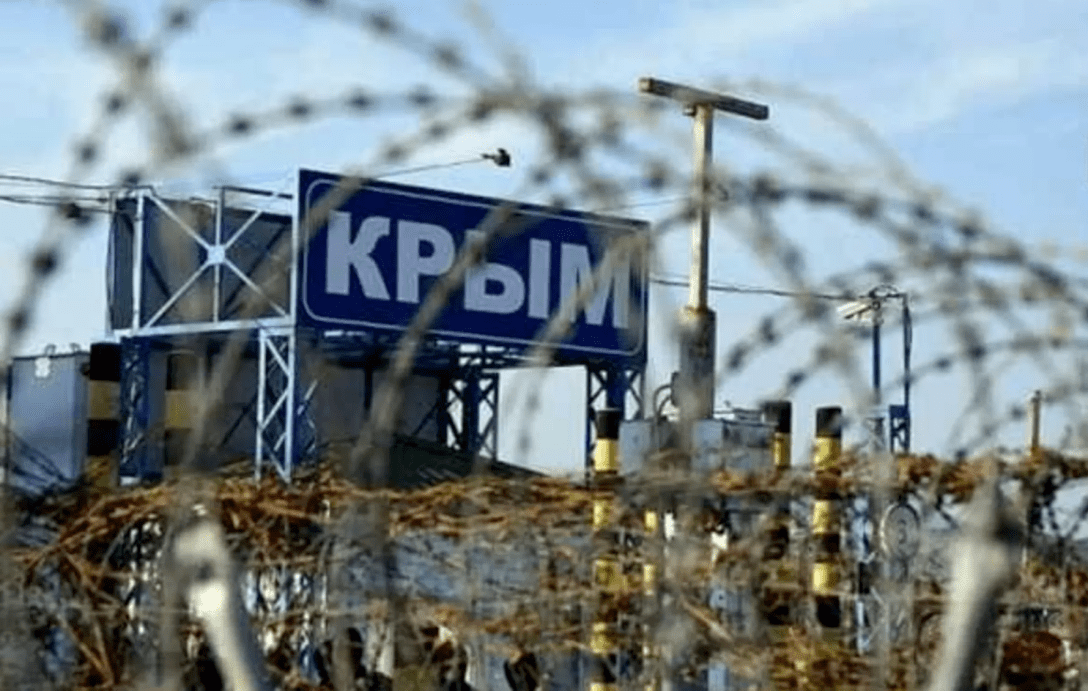
4. If you look through the prism of those events, the connections with the present become very evident .
When I read comments today about another “historic” speech by some Western politician who saw the light and/or “opened the eyes” of the world, I mentally play bingo. Fixing what many in Ukraine have been shouting about since 2014.
A thesis that the West has yet to fully voice and around which they are verbally dancing: a reactive position is evil, a dead end and a clear loss. Since the end of 2020, this thesis has been voiced by the Ukrainian side at all thematic meetings that I can judge.
The aggressor always wins, “deterrence” after the fact does not work. The only chance to prevent negative scenarios is proactive, preventive actions. And this will not be a “provocation”. Quite the opposite, it is the best antidote.
But it's scary to accept because it changes all strategies.
The second point: the desire of Western partners to act not as they should, but as they are comfortable. And to demand from the victim of aggression not to violate this comfort. What in 2014, what in 2022.
Therefore, the practical conclusion: when it comes to Russians, you need to offer the most fierce resistance possible. Against any intentions.
Let it look like a disproportionate use of force — it doesn't matter. If you give in to the persuasion to "not escalate" — everything will definitely end badly. And so there will be a chance.
Third point: Since 2014, partners have repeatedly been told that the occupation of Crimea has completely changed the context.
The seizure and illegal annexation of Crimea is an attack not only on Ukraine. Among other things, it is an undermining of two fundamental ideas of the world order:
- ideas of respect for the territorial integrity of states;
- ideas of free navigation.
If a country that is a permanent member of the UN Security Council attacks the foundation on which the world is based, the consequences will definitely affect everyone. Not just Europeans.
If the Kremlin can occupy the Black and Azov Seas, why can't the Houthis hooliganize? Anyone who has the power or the situational opportunity to impose their demands will be able to play without rules.
Accordingly, this situation can only be reversed by returning Crimea. And this is the common interest of all for whom the above ideas are important.
Of course, there are those who would like to reconsider them for their own reasons, because there are hundreds of conflicts and fault lines on the planet. Therefore, it is worth weighing the consequences.
5. As for Crimea itself, a lot has changed in 10 years.
When the time comes, it will be the return of another Crimea to another Ukraine . Therefore, it is necessary to develop models, but any attempts now to push some obsessive ideas about the post-war structure of life on the peninsula are a waste of time and a way to start a quarrel.
The main thing now is that the idea of Crimea as a naval fortress has been seriously undermined. The continuation of this idea is a demilitarized zone. And some format of international guarantees to make it profitable to invest money there.
There are many predictions about Crimea, but the fact is that Crimea is no longer in the shadows.