
“So this year, will Easter be new or still old?” two women say to each other near a church in Lviv, where they have already switched to the new calendar, but they can’t figure out what’s wrong with Easter.
It may come as a surprise to some, but all Orthodox and Greek Catholics continue to celebrate this major Christian holiday in the old way. In 2024, it will be May 5, while Catholics will celebrate it five weeks earlier, on March 31.
It turns out that while some are just entering Lent, others (and there are about 1.5 million Catholics in Ukraine) will already be preparing to celebrate, and the unification of calendars, as some believed, has not fully taken place.
Some Ukrainian Orthodox (OCU) and Greek Catholics have abandoned the old Julian calendar since September 2023 and celebrated Christmas on December 25 instead of January 7.
However, with Easter (often called Paska), as with a number of other so-called moveable holidays, including Trinity, things are not so simple.
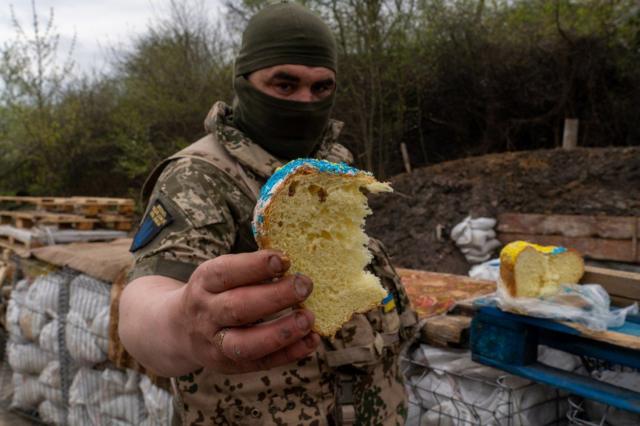
PHOTO AUTHOR, UNIAN Photo caption, Easter Easter cake – it is even delivered to the front
The thing is that Ukrainian churches have not switched to the pure Gregorian calendar, but in fact to the updated New Julian calendar, in which the so-called moveable holidays are still determined in the old way.
And the definition of Easter for Christians is generally a complex and controversial matter. Due to many nuances, Catholics and Orthodox have had great disagreements and have been arguing for more than one hundred years.
A hundred years ago, the Ecumenical Patriarchate, and after it a number of other Orthodox churches in Europe, switched to a new calendar. But they too did not dare to touch Easter and still celebrate it in the old way.
At the same time, next year, 2025 (such a coincidence happens once every 3-4 years), both Catholics and Orthodox will celebrate Easter on the same day. How is this calculated, why is everything so complicated, and is there a chance that starting next year, most Ukrainians will celebrate Easter in a new way?
Such a different Easter
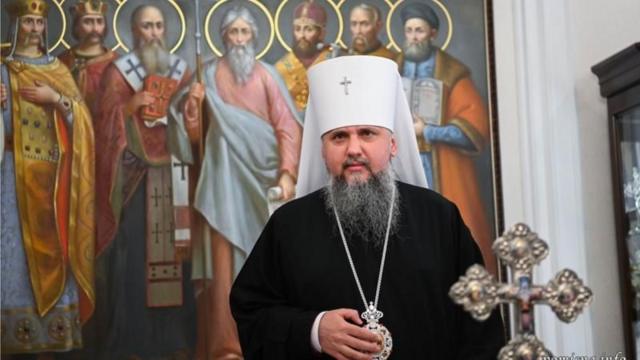
PHOTO AUTHOR, OCU Photo caption, The OCU does not really believe that a compromise is possible regarding the transition to a common day of celebrating Easter. In the photo - Metropolitan Epiphany at the cathedral in Kyiv in 2023, which approved the transition to the New Julian calendar
The Easter problem is not solved by simply switching from the Julian to the new calendar due to a long-standing and deep dispute.
Easter is not tied to a date, but to the vernal equinox and the full moon. And here Catholics and Orthodox Christians have long diverged, although these nuances are not easy to understand and explain.
The old Paschalia is tied to the Julian calendar - a method of determining the date of Easter, which was approved in 325 by the Council of Nicaea of the then-unified church.
That council established that Easter should be celebrated on the first Sunday after the first full moon after the vernal equinox.
The rule is supposedly simple, but in fact the calculation scheme is complex, the church calendar over time began to differ greatly from the astronomical one. Therefore, the spring equinox in the West and East after the calendar reform of the 16th century began to be calculated differently. Catholics switched to calculations that are close to astronomical, while the Orthodox continued to count in the old way. Therefore, the same supposedly rule began to display different dates.
In short, the difference between the dates of Easter according to the Eastern and Western traditions is caused by the difference in the calculation of the vernal equinox due to the difference between the calendars of 13 days. After the reform, the Western tradition of determining the vernal equinox is closer to the astronomical equinox, while the Eastern tradition may be “late”.
Therefore, the first full moon after the vernal equinox is counted differently for everyone, and most often for Catholics it comes earlier.

PHOTO AUTHOR, UNIAN Photo caption, Catholics and Protestants of Ukraine will consecrate Easter baskets on March 31, and Orthodox and Greek Catholics on May 5
For example, according to the “civil calendar,” which practically coincides with the Gregorian calendar, the vernal equinox in 2024 will be March 20 (according to the church calendar, March 21). The first full moon is March 25, and therefore Easter is on the first Sunday after such a full moon, March 31.
And the old method of determining the equinox according to the Julian church calendar, which does not correspond to the astronomical one, brings Easter to May 5 (the Jewish Passover of April 23-30 also played a role here, before which the Orthodox do not celebrate Easter, so the celebration was moved from April 28 for another week).
Sometimes the difference with the equinox according to both calendars is not significant, and the dates of Easter coincide.
Therefore, Easter according to the Gregorian calendar is celebrated a week earlier than according to the Julian calendar in 45% of cases. In 30% of cases, Easter coincides (this will be the case in 2025), 5% - a difference of four weeks, 20% - a difference of as much as 5 weeks (more than a lunar cycle - this will be the case in 2024).
There is no difference of two or three weeks. As we can see, there is no sacred connection to a specific date here. People normally perceive both celebrations together and separately.
It so happened that according to the Julian calendar, Easter must be celebrated after the Jewish Passover, while the Gregorian calendar, due to astronomical and mathematical features, sometimes violates this rule.
Although the insistence that Easter should not be celebrated at the same time as or before the Jewish Passover appeared as early as the 11th-12th centuries in Byzantium.
Among other arguments for not updating the old method of calculation, they cite the fact that Jesus Christ himself lived according to the Julian calendar. They also mention the Holy Fire, which, according to churchmen, descends in the Church of the Resurrection (Holy Sepulcher) in Jerusalem precisely on the eve of the “old Orthodox” Easter, and not the “Catholic-Protestant” one.
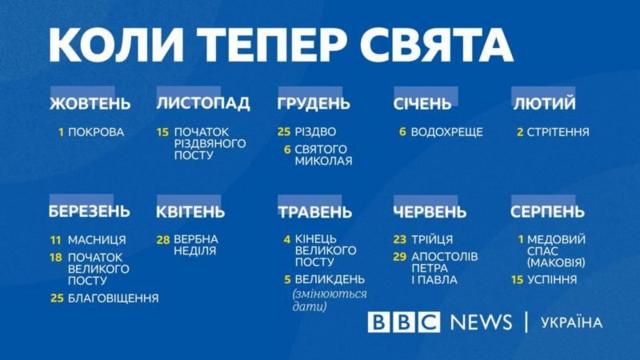
PHOTO BY BBC
Can there be a permanent joint celebration of Easter?
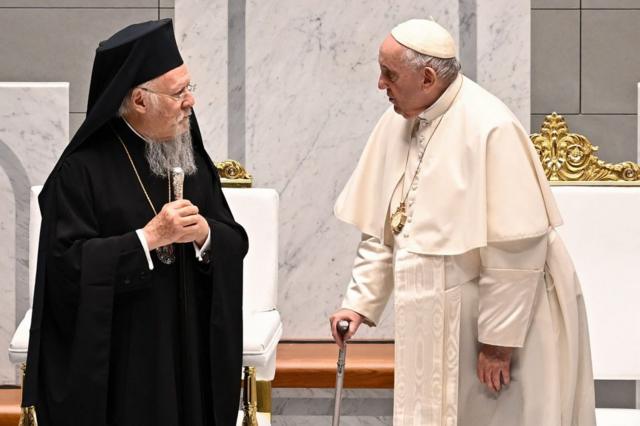
PHOTO AUTHOR, GETTY Photo caption, The Ecumenical Patriarch and the Pope may try to agree on a joint celebration of Easter. However, the chances of this are slim, and will other Orthodox churches listen to Bartholomew?
At first glance, especially for someone who has difficulty understanding the nuances of calculating equinoxes and calendars, it might be easier than agreeing to celebrate Easter together.
Moreover, it is not so rare that this happens by itself - the joint celebration will be in 2025 on April 20, then in 2028 - on April 16.
Church-related media outlets have been writing in recent years that certain negotiators from the Pope and the Ecumenical Patriarch are working to try to agree on a common date for Easter in the future for all churches that have switched to the new calendar.
Such negotiations and attempts have taken place more than once since the 17th century and have ended in failure.
There is a good reason for this now - in 2025, not only will all Christians celebrate Easter on the same day, but that year they will also celebrate the 1700th anniversary of the Council of Nicaea, common to all, which established the rule for calculating Easter.
However, the chances of this, as BBC Ukraine's interlocutors in church circles say, are small.
“This is a good opportunity for dialogue regarding the date of Easter. But this does not mean that there will be a quick result,” says an interlocutor in the Ecumenical Patriarchate.
He notes that there is now a certain level of desire to try to find ways to count and celebrate Easter together.
“This coincidence and the celebration of the council are a good opportunity to open negotiations. But who knows what will happen in the world in 12 months,” the interlocutor says.
He admits that in the conditions of Russia's war against Ukraine and uncertainty in the Orthodox world, no one will make any predictions.
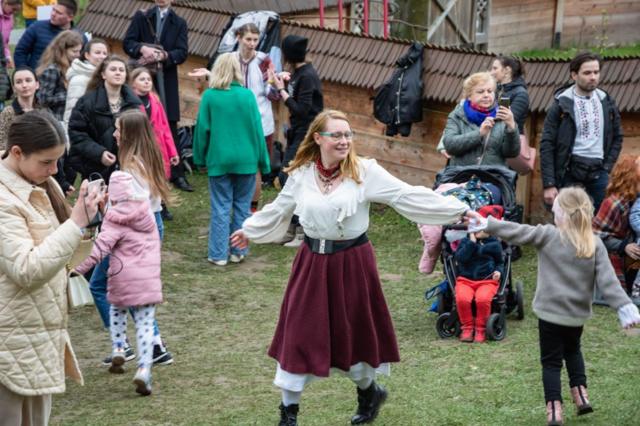
PHOTO AUTHOR, GETTY Photo caption, In Lviv, the second day after Easter is celebrated with festivities in Shevchenko Grove. For such fun, Easter in May is a chance for good and warm weather
Some Orthodox churches, such as the Russian, Serbian, Georgian, and Jerusalem Patriarchates, still live according to the Julian calendar, and they will not want to change the calculation of Easter according to the agreement between Constantinople and Rome.
The Russian Church has severed ties with Constantinople and will definitely not switch to the new calendar, just like the UOC-MP, which is actually subordinate to it in Ukraine.
Moreover, no one can predict how those Orthodox churches that have switched to the New Julian calendar and, for example, celebrate Christmas on December 25 will react to the change in the celebration of Easter, if Constantinople and Rome agree.
Therefore, representatives of the Orthodox Church of Ukraine, the UGCC, and religious experts with whom BBC Ukraine spoke are inclined to believe that changes in the calculation of Easter should not be expected in the foreseeable future.
A BBC Ukraine interlocutor in the leadership of the OCU, without optimism, calls attempts to reach an agreement on Easter “empty fantasies.” First, they do not really believe in the possibility of an agreement between Constantinople and Rome, and second, there may be an even greater split among the Orthodox.
The Ukrainian Greek Catholic Church (which is subordinate to Rome but has an Eastern rite) is more optimistic, and they still have some hopes for negotiations in 2025.
In a conversation with BBC Ukraine, the spokesman for the UGCC, Father Ihor Yatsiv, expressed hope that the dialogue between Rome and Constantinople will end successfully, and after 2025, "there will be a joint celebration of Easter.".
But in any case, the church wants to make the transition to a new definition of Easter simultaneously with the Orthodox Church of Ukraine, so if there is no global agreement, the transition in the country is unlikely to happen.
“In Ukraine, we live together with our Orthodox brothers, so we do not want to create calendar divisions between us so as not to celebrate Easter differently,” insists Father Ihor Yatsiv.
In his opinion, this year, when the difference between the dates of Easter is as much as five weeks, clearly shows the problem, and therefore we need to move, but in a balanced way and simultaneously.
“On March 18, we begin Great Lent, and on March 31, according to the Gregorian calendar, Easter is. Therefore, some are just entering Lent and bowing, while others are already celebrating,” he says. Church leaders do not want to allow this, especially in villages where the OCU and UGCC communities jointly use the same churches.
Easter is a unique holiday for Ukrainians, when many not very religious people go to church, even Christmas is not like that, when it is celebrated at home.
That's why the difference in calendars for Easter is so important, and churchmen are most wary of sudden movements here.
